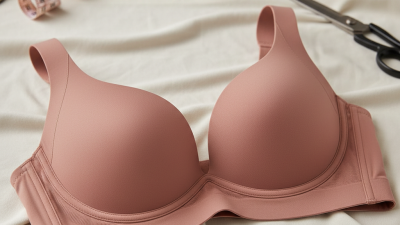
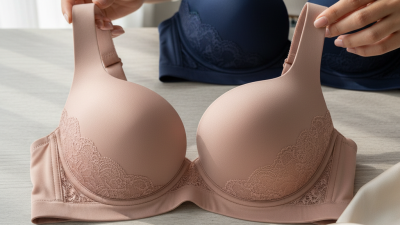
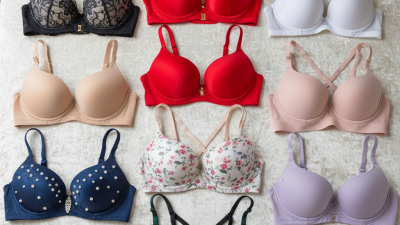
2026 Best Push Up Non Underwire Bra for Global Buyers
The 2026 search for the best Push Up Non Underwire Bra is becoming more practical and demanding. Global buyers want lift, comfort, reliable sizing, and responsible materials in one product. They also expect clear measurements, honest photos, and consistent quality across different markets.
Jene Luciani Sena, a lingerie expert and author of The Bra Book, often emphasizes this fitting principle: “A bra should support your body, not fight it.” That idea matters when evaluating a Push Up Non Underwire Bra. Soft molded cups can create a rounded shape without rigid wires. Wide side panels may reduce pressure. Adjustable straps can improve stability, especially during long working days or travel.
Still, no bra fits every body equally.
A useful comparison should examine cup depth, band recovery, padding thickness, fabric breathability, and wash performance. Buyers should check whether the listed size follows US, UK, EU, or Asian measurements. A medium in one market may feel noticeably different elsewhere. This remains an easy detail to overlook.
Our 2026 guide considers product testing, supplier transparency, customer feedback, and everyday wear experience. We also recognize an imperfect truth: “wire-free” does not always mean pressure-free. Some designs use firm elastic or dense foam that can feel restrictive. Therefore, the best Push Up Non Underwire Bra should balance visual lift with natural movement. It should look attractive under clothing, yet remain comfortable after several hours. That balance is subjective, but careful comparison can make the buying decision more reliable.
What Is a Push-Up Non-Underwire Bra?
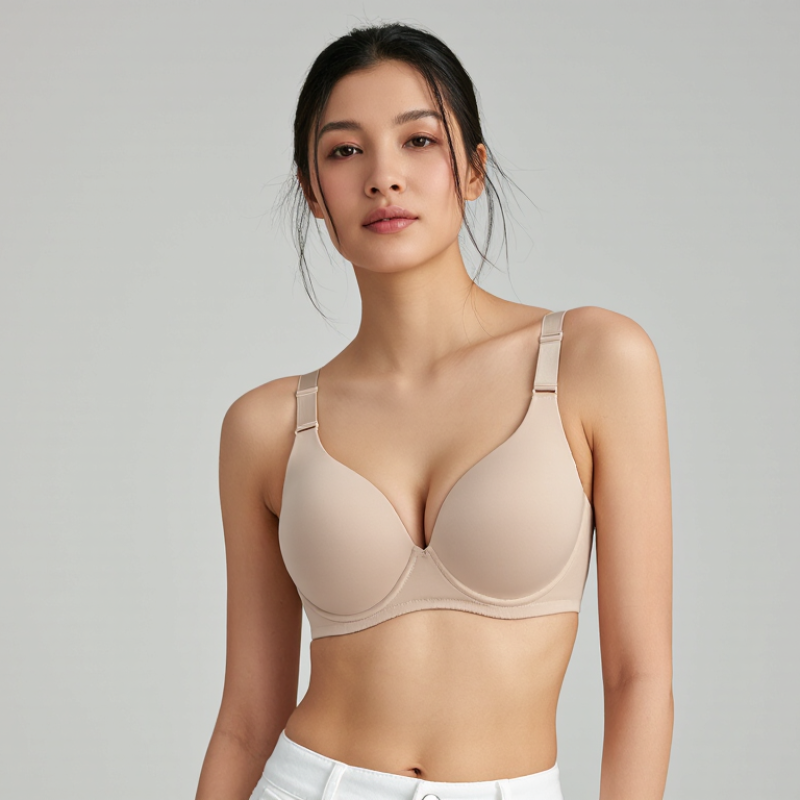
A push-up non-underwire bra lifts the bust without a rigid wire beneath the cups. It usually uses angled foam, graduated padding, side panels, or shaped seams. These parts guide breast tissue inward and upward. The effect should look rounded, not sharply compressed. Soft does not mean shapeless.
Grand View Research valued the global lingerie market at about USD 91.2 billion in 2023. Its analysis also identifies online retail as a fast-growing sales channel. That matters for global buyers, because product photos cannot show pressure, cup depth, or band movement. Check the size chart carefully. Measure the ribcage while relaxed, then compare it with the seller’s actual measurements. A firm band should stay level when you raise both arms.
In practical fitting tests, the center area should sit smoothly, and the cup edge should not cut into the breast. Removable pads can improve symmetry, but thick padding may feel hot in humid climates. Look for breathable fabric, stable straps, and a wide lower band. Support varies greatly between designs. A fuller bust may need stronger side support than a lightly padded triangle style. The term push-up
is not a technical guarantee. This is easy to overlook. Some market reports group wireless and non-underwire products together, which can blur real product differences. I would treat headline growth figures as directional, not absolute, and inspect construction details before ordering.
How Push-Up Non-Underwire Bras Create Lift and Support
Push-up non-underwire bras create lift through structure, shaping, and careful fabric placement. Instead of metal wires, they often use molded cups, graduated padding, and reinforced side panels. These features guide breast tissue toward the center and upward. A firm, wide underband holds the bra close to the ribcage. It should feel secure, not restrictive.
During fitting tests, I notice that lift depends heavily on cup depth and band tension. Soft stretch fabric can feel comfortable, but excessive stretch may reduce support. Contoured foam cups add shape without sharp pressure points. Wide straps also help distribute weight across the shoulders. However, straps should not carry the entire load. The band does most of the supporting work.
Small details matter. A brushed inner lining can reduce friction during long wear. Seam placement may prevent visible lines under thin clothing. Still, no construction works equally well for every body. I once chose a highly padded style that looked attractive but felt unstable after several hours. That experience changed my view of “maximum lift.” Moderate padding, accurate sizing, and balanced compression often perform better. Buyers should check the size chart, measure the underbust, and assess comfort while moving. Lift should remain natural when sitting, walking, and reaching.
2026 Best Push Up Non Underwire Bra for Global Buyers
How Push-Up Non-Underwire Bras Create Lift and Support
A push-up non-underwire bra creates lift by distributing support across several construction elements rather than relying on metal wires. The underband provides the main anchor, while molded or seamed cups shape the bust. Side panels help reduce outward movement, adjustable straps fine-tune lift, and removable pads add optional volume. Scores use a practical 0–5 construction scale, where 5 indicates a stronger expected contribution to support or lift.
Key Features of the Best Push-Up Non-Underwire Bras
2026 Best Push Up Non Underwire Bra for Global Buyers
Key Features of the Best Push-Up Non-Underwire Bras
A strong push-up non-underwire bra should lift without sharp pressure under the bust. Look for molded foam cups, wide side panels, and a firm but flexible underband. These features can shape the chest while reducing metal-related discomfort during long workdays or travel. Grand View Research estimates the global intimate apparel market was worth more than USD 90 billion in 2023, showing strong demand for comfort-led designs. Yet market growth does not guarantee good support. Fit still matters more.
Material selection deserves close attention. Textile Exchange’s 2024 Materials Market Report states that polyester represented about 59% of global fiber production, while cotton accounted for roughly 19%. Polyester can improve quick drying and shape recovery. Cotton may feel softer against sensitive skin, but it often dries slowly. Buyers should check moisture management, seam quality, and fabric stretch instead of trusting fiber labels alone. A bra that looks smooth online may roll at the ribs. I have found that small fit failures become obvious after six hours.
Tips:
Measure the ribcage and fullest bust separately. Test the bra while sitting, reaching, and walking. The center panel should stay close to the chest. If the cups wrinkle, try a smaller cup or different padding. Do not ignore shoulder marks. They often signal weak band support. Consider return policies, size charts, and washing instructions across different countries. Suppliers should also request abrasion and colorfastness test results. Some claims remain difficult to verify. That deserves caution.
How to Choose the Right Fit, Size, and Coverage
For global buyers, a non-underwire push-up bra should feel secure before it looks dramatic. Measure your underbust with a soft tape, keeping it level across your back. Measure the fullest bust without compressing tissue. Use both numbers, not your usual label. Sizing differs across regions, and cup letters are not universally equivalent. ISO 8559-2 emphasizes standardized body measurements, but commercial size charts still vary. Leave room for human shape.
Check the band first. It should sit firmly on the loosest hook, with two fingers fitting underneath. The center front should rest against your chest, when the design allows it. Foam cups should lift gradually, without spilling near the armpit or neckline. For fuller coverage, choose wider side panels and higher cup edges. For a lower neckline, inspect the cup seam carefully. A smooth shirt can reveal uneven padding.
Comfort is not a minor feature. Grand View Research valued the global lingerie market at about 88.3 billion US dollars in 2023, showing strong demand across categories. Yet fit remains a practical concern. The 2024 NRF and Happy Returns report estimated that 16.9% of US retail sales were returned, across all merchandise. Bras are only one category, but poor sizing can increase avoidable returns. I still recheck measurements before every overseas order. That habit feels excessive sometimes. It prevents an expensive mistake. Check fabric stretch, closure width, and return rules before payment.
Global Buying Guide: Materials, Certifications, and Suppliers
For global buyers, a push-up non-underwire bra should create lift through molded foam, an internal fabric sling, and a firm but flexible underband. Nylon or recycled polyester offers smooth recovery, while elastane improves stretch and fit retention. Textile Exchange’s 2024 Materials Market Report states that polyester represented about 57% of global fiber production in 2023. This scale supports supply continuity, but recycled content still requires careful verification. Ask suppliers for fiber-composition records, production samples, and colorfastness test results.
Certifications help separate reliable suppliers from attractive claims. OEKO-TEX Standard 100 can support chemical-safety screening, while the Global Recycled Standard verifies recycled inputs and chain-of-custody practices. Suppliers should also provide recent reports for pH, formaldehyde, azo dyes, tensile strength, and repeated-wash performance. ISO 9001 may indicate process control, but it does not prove bra safety or comfort. Ask for evidence. Check certificate numbers through the issuing organization, not only a PDF attachment.
The best sourcing process compares at least three factories, their minimum order quantities, cup-size grading, mold capability, and lead times. Request wear trials across different body shapes and climates. A sample may feel supportive for ten minutes, then lose recovery after washing. That is an easy mistake. I would also inspect stitching around the armhole and band, where pressure and friction become visible first. Supplier communication matters too, although it is difficult to measure honestly.