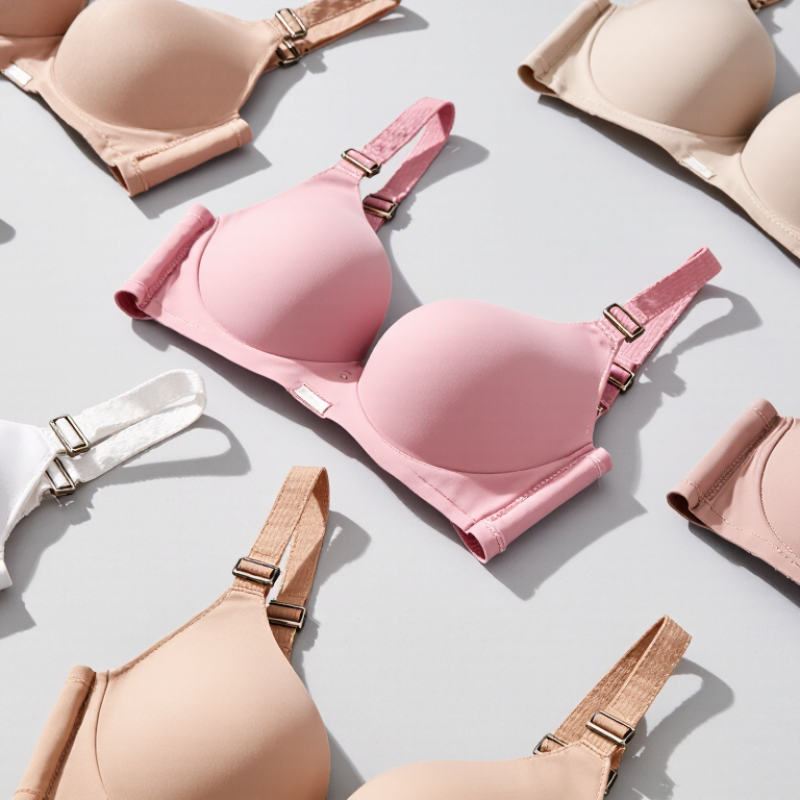
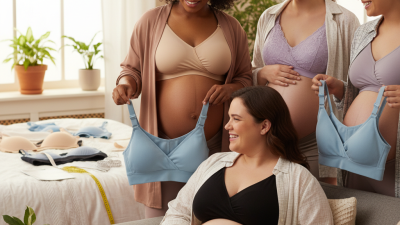
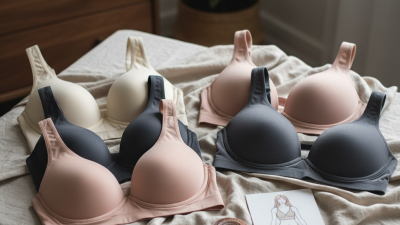
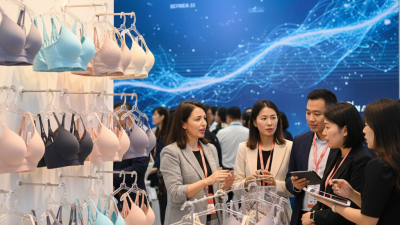
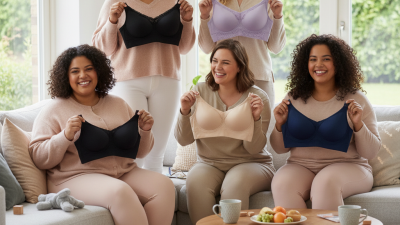
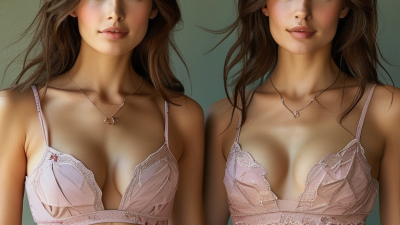
The 2026 wholesale market is making comfort a commercial requirement, not a passing trend. Non Wired Push Up Bra designs combine rounded shaping with lighter construction, appealing to consumers who dislike rigid underwires. Grand View Research reported continued growth in the global lingerie market, supported by online retail, body-inclusive sizing, and comfort-focused product development. Circana’s apparel research also highlights value, versatility, and everyday wear as important purchasing factors.
For wholesale buyers, the details matter. A soft microfiber cup may look attractive, yet poor recovery can create wrinkles after washing. A wide underband can improve stability, but excessive tension may reduce comfort. Check cup depth, side support, strap adjustment, stitching density, and size grading before placing large orders. Small tests reveal expensive problems.
Bra-fitting educator Jene Luciani Sena has said, “The bra is the foundation of your outfit.” That principle remains useful, although foundation does not mean compression. A successful Non Wired Push Up Bra should lift naturally, stay smooth beneath a white T-shirt, and remain comfortable after several hours. Suppliers should request laboratory or factory test records for stretch recovery, colorfastness, wash durability, and nickel-free hardware.
The sourcing process is not perfectly predictable. Consumer preferences vary across regions, and one fit model cannot represent every body. Buyers may need two or three sampling rounds. Reliable factories should explain their foam density, fabric composition, mold process, and quality-control limits clearly. In 2026, the strongest wholesale opportunities will come from products that balance visible shaping, honest sizing, dependable production, and real daily comfort.
Non-wired push-up bras use foam cups, molded shaping, and supportive side panels instead of metal underwires. They lift the bust while reducing pressure beneath the breast. This design often feels softer during long workdays, travel, and light movement. However, comfort depends on construction. Weak elastic can roll. Poor foam recovery can flatten after washing. These details matter when evaluating wholesale suppliers.
From my sourcing experience, buyers should request physical samples before placing bulk orders. Check cup symmetry, strap adjustment, stitching, and band recovery. Test each sample after several washes. A reliable factory should provide material details, size measurements, inspection records, and clear production timelines. Fit charts help, but they are not perfect. Real bodies vary. That remains a difficult issue.
Wholesale purchasing can lower unit costs and support consistent inventory. Non-wired styles usually require fewer metal components, which may simplify assembly and packing. Suppliers can also offer several cup depths, neutral colors, and removable pads for different markets. Ask about minimum order quantities, replacement policies, and packaging options. Confirm that labels and materials meet the destination market’s requirements. A lower price is not always a better deal. Returns, uneven sizing, and delayed delivery can quickly erase the savings. Small trial orders are wiser than ambitious guesses.
2026 How to Source Non Wired Push Up Bras Wholesale
Identifying Target Customers and Selecting Suitable Bra Styles
Wholesale sourcing should begin with the customer, not the product catalog. Young professionals may prefer seamless non-wired push-up bras for office outfits and long commutes. Shoppers seeking comfort often want wide straps, soft side panels, and light, removable padding. Curvier customers may need deeper cups, stronger underbust bands, and reinforced back support without wires. Study customer reviews, return reasons, and sales data before placing a large order. Small surveys can reveal useful details, such as preferred colors, strap widths, and closure types. Keep records. Guessing alone is risky.
Select styles that match real wearing situations. A lightly molded bra can create a smooth shape under thin shirts. A plunge design may suit low-cut clothing, while a fuller-coverage style supports everyday use. Breathable microfiber works well in warm markets, but cotton-blend lining may feel more familiar to comfort-focused buyers. Check stitching, padding recovery, band elasticity, and size consistency through physical samples. Test several sizes on different body shapes. One sample is not enough.
Ask suppliers for fabric details, measurement charts, production capacity, and quality-control procedures. Confirm that labels and packaging meet the destination market’s requirements. I have found that attractive photos can hide weak seams or uneven padding. That mistake is easy to make. Revise the size range after trial sales, even when the first forecast looked convincing. Customer feedback should guide the next wholesale order.
Target customer priorities and suitable bra-style recommendations
This planning benchmark shows the recommended share of a non-wired push-up bra assortment for four common wholesale customer groups. Younger online shoppers typically favor seamless comfort and removable padding, while fuller-bust customers generally need wider straps, stronger side support, and deeper cup coverage. The percentages represent a practical assortment allocation rather than company or brand sales data.
Sourcing non-wired push-up bras wholesale in 2026 requires more than comparing prices. A reliable supplier should provide factory details, production capacity, lead times, and clear communication. Request current samples before approving bulk orders. Check stitching around the underbust, strap adjustment, cup recovery, and hook strength. Small defects often appear after repeated fitting.
Material selection affects comfort, support, and return rates. Soft microfiber can create a smooth feel, while cotton-rich blends may improve breathability. Foam thickness should lift the bust without creating sharp edges or excessive pressure. Ask for fiber composition, colorfastness results, and washing instructions. Test samples after several washes. Real use reveals more than a showroom inspection. I have found that sizing charts are often incomplete, especially between cup volumes. Measure the band, cup depth, strap length, and front coverage separately. Offer a measured size set, not only standard labels. This takes extra time.
Product certifications need careful review. Confirm the certificate holder, testing laboratory, issue date, product scope, and applicable market requirements. A certificate alone does not prove every shipment meets the same standard. Match the tested material and construction with the production sample. Keep inspection photos, test reports, and signed specifications in one record. Third-party inspections can check packing quantities, labels, measurements, and visible defects before shipment. Do not rely on promises. Some suppliers answer quickly but avoid technical questions. That is a warning sign. Recheck everything.
| Evaluation Area | Data Dimension | Practical Wholesale Benchmark | How to Verify | Sourcing Implication |
|---|---|---|---|---|
| Supplier Capability | Production experience | At least 3 years of experience producing wireless bras or comparable intimates. | Review dated product records, factory audit reports, and recent production references without relying only on catalog images. | Specialized experience generally reduces fit, support, and construction risks. |
| Supplier Capability | Minimum order quantity | Confirm MOQ separately by style, color, and size; a practical pilot target is 100–300 pieces per color or style where available. | Request a written quotation showing sample, color, size, and reorder MOQs. | Lower pilot MOQs help test fit and sell-through before committing to large inventory. |
| Supplier Capability | Sample and production lead time | Request a sample timeline of approximately 7–21 days and a production timeline of approximately 30–60 days, subject to material availability. | Obtain a dated production schedule and confirm whether lead time includes fabric, trims, inspection, and packing. | Clear lead-time ownership supports seasonal planning and reduces delivery surprises. |
| Materials | Main fabric composition | Common options include polyamide/elastane or polyester/elastane blends. Request the exact fiber percentages rather than using generic terms such as “spandex fabric.” | Check the fiber-content declaration, fabric specification sheet, and laboratory composition test if required. | Fiber content affects stretch recovery, softness, moisture handling, appearance, and care labeling. |
| Materials | Cup padding | Typical push-up construction uses removable or fixed foam pads made from polyurethane foam, with thickness commonly specified by the supplier in millimeters. | Request pad thickness, density, shape, removable-pad details, and wash-test results. | Pad geometry has a direct effect on lift, cleavage, comfort, and size grading. |
| Materials | Support structure | A non-wired design may use a wide underband, molded cups, side panels, power mesh, bonded seams, or reinforced center-front construction. | Evaluate support during movement tests and inspect seam strength, band recovery, and cup deformation after washing. | Support should come from fabric engineering and pattern design rather than an underwire. |
| Materials | Hardware and trims | Confirm the material of sliders, rings, hooks, eyes, strap components, and decorative accessories; coated metal and plastic are common options. | Request trim specifications and test reports for colorfastness, corrosion resistance, and restricted substances where applicable. | Trim quality influences skin comfort, durability, appearance, and regulatory risk. |
| Fit and Sizes | Size range | A useful launch range may include band sizes 30–40 and cup sizes A–DD, but the final range should follow the target market and validated grading rules. | Request a measurement chart showing underbust, bust, cup depth, center-front height, and garment tolerances for every size. | A larger size range requires separate fit testing, stronger support zones, and accurate grading. |
| Fit and Sizes | Size-system conversion | US, UK, EU, and Asian size labels do not always correspond directly; the supplier should provide market-specific conversions instead of using one universal label. | Compare the supplier chart with the destination market’s approved size guide and conduct fit tests on live models. | Incorrect conversion can increase returns and create inconsistent customer expectations. |
| Fit and Sizes | Stretch and recovery | The underband should provide stable support without excessive compression; recovery should be assessed after repeated stretching and laundering rather than from a single try-on. | Measure band length before and after standardized stretch and wash testing. | Poor recovery can cause riding up, loss of lift, and premature product failure. |
| Quality Control | Defect inspection | Inspection should cover measurements, stitching, fabric defects, cup symmetry, pad placement, hardware function, labeling, and packing. | Use an approved inspection checklist and define acceptable quality limits before bulk production. | Pre-shipment inspection helps identify defects before goods leave the production site. |
| Product Testing | Colorfastness and dimensional stability | Testing should address laundering, perspiration, rubbing, dimensional change, and appearance retention according to the destination market’s requirements. | Request reports from a competent textile laboratory and confirm that the tested material and color match the production order. | Reliable test evidence reduces complaints about fading, shrinkage, and staining. |
| Certifications | OEKO-TEX STANDARD 100 | This certification concerns testing textile components for harmful substances; the certificate should cover the actual finished product or relevant components. | Verify the certificate number, scope, validity period, product class, and certificate holder through the official certification system. | Useful for communicating restricted-substance testing, but it does not replace destination-market legal compliance. |
| Certifications | Global Recycled Standard | GRS applies to products containing recycled material and includes chain-of-custody and social, environmental, and chemical requirements; GRS products generally require at least 50% recycled content. | Check the transaction certificate, certified scope, recycled-content percentage, and chain-of-custody documentation. | Do not make recycled-content claims based only on a supplier statement or fabric quotation. |
| Certifications | ISO 9001 | ISO 9001 is a quality-management-system standard, not a product safety certification. | Verify the certificate scope, issuing certification body, facility address, and validity dates. | It may indicate documented processes, but finished-product inspection and testing are still necessary. |
| Regulatory Compliance | EU chemical and labeling requirements | For EU sales, review applicable REACH restricted-substance obligations and textile fiber-labeling requirements before shipment. | Obtain current laboratory reports, fiber-content records, and destination-market labeling artwork. | Regulatory duties depend on the selling market and cannot be replaced by a general “export quality” claim. |
| Regulatory Compliance | United States requirements | For US sales, confirm applicable fiber-content, country-of-origin, care-labeling, and general consumer-product requirements; children’s-product rules may differ from adult apparel rules. | Have the importer or compliance specialist review labeling and test documentation for the exact product category. | A supplier certificate alone does not transfer the importer’s legal responsibility. |
| Commercial Terms | Payment and shipping terms | Compare deposit percentage, balance timing, Incoterm, carton dimensions, gross weight, production location, and insurance responsibility. | Request a pro forma invoice and landed-cost estimate using the same order quantity for every quotation. | The lowest unit price may not provide the lowest landed cost after freight, duties, inspection, and rework. |
| Sustainability | Packaging and material efficiency | Prefer right-sized packaging, documented recycled content where claimed, and packaging materials that can be identified for recycling in the destination market. | Review packaging specifications, material declarations, and any valid chain-of-custody documents. | Packaging decisions affect shipping volume, cost, customer perception, and environmental claims. |
Wholesale sourcing works best when price, minimum orders, and customization are compared together. A low unit price can hide high sampling fees, packaging costs, or expensive freight. Grand View Research valued the global lingerie market at about USD 83.7 billion in 2023, with continued growth projected through 2030. That demand creates opportunities, but also attracts inconsistent suppliers.
For non-wired push-up bras, indicative factory quotations often range from USD 2.80 to USD 6.50 per piece, depending on fabric, padding, and order volume. A basic MOQ may begin near 300 pieces per color, while custom colors, labels, and packaging can raise it to 500 or more. These figures are working benchmarks, not fixed market rules. The numbers are not perfectly comparable.
Customization needs careful testing. Ask for foam thickness, pad shape, strap width, recovery after washing, and size grading. A 10-millimeter pad may create visible lift, but it can feel heavy in hot climates. Recycled polyamide may support sustainability claims, yet its hand feel and price require checking. The Textile Exchange Materials Market Report shows recycled polyester remains widely used, although broader material transparency is still uneven. Request a pre-production sample, measurement chart, fabric composition, and inspection record. I would also compare landed cost per sellable unit, not the factory quote alone. Small mistakes happen. That is why a second fit review is worth the delay.
For wholesale non-wired push-up bras, sample management starts with a written measurement sheet. Record cup depth, band stretch, pad thickness, fabric composition, and closure details. Keep one approved sample untouched. Use a second sample for wear testing. Ask testers to move, sit, and wash the bra twice. Record pressure points, pad shifting, and fabric recovery after six hours. Photos alone miss uncomfortable seams and uneven padding.
Quality control should follow the approved sample, not memory. Check at least ten pieces from every production batch. Measure the band, inspect stitching, and compare both cups under flat lighting. Test straps and closures gently, but repeatedly. A small defect can become a large return problem. My early sampling process ignored color variation between fabric lots. That mistake delayed a shipment and weakened buyer confidence. Now, I request a lot-specific shade card before bulk production.
Shipping plans need realistic space and timing. Confirm carton dimensions, packing counts, product labels, and moisture protection before booking freight. Leave room for inspection delays. Inventory planning should use sales history, seasonal demand, and supplier lead time. Split large orders when cash flow is tight. Hold deeper stock in core sizes, but avoid excessive niche colors. Review inventory weekly. A spreadsheet can still mislead when damaged goods remain included. Physically count random cartons and update available stock. Small corrections matter.