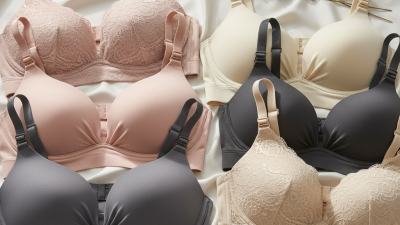
Buying Mesh Bras wholesale can look simple until quality, sizing, and landed costs begin competing for attention. A catalog photo rarely reveals fabric recovery, seam comfort, or how mesh behaves after washing. Retailers need more than attractive styles. They need dependable products that protect customer trust.
Rina Patel, a lingerie product-development consultant with experience in private-label sourcing, says, “A successful Mesh Bras order begins with evidence, not assumptions.” Her advice reflects a practical reality. Buyers should verify fabric composition, stretch direction, cup construction, underwire support, and size grading before negotiating volume. Request physical samples. Examine the mesh under bright light. Check whether the edges curl, the straps twist, or the hooks feel weak. Small defects become expensive when multiplied across hundreds of units.
This guide, “10 Tips for Buying Mesh Bras Wholesale,” examines the decisions behind a safer purchase. It covers supplier screening, sample evaluation, minimum order quantities, pricing, packaging, lead times, and quality inspections. It also considers fit consistency across sizes, because one successful sample proves very little. Ask for test reports when applicable, and confirm product claims with written specifications. Do not rely only on polished promises.
There is room for mistakes. A low unit price may hide costly returns, slow communication, or inconsistent production. I have found that buyers sometimes focus too heavily on appearance. Comfort gets overlooked. That can weaken repeat sales. Careful comparison takes longer, but rushed orders often take longer still. Mesh Bras should feel delicate, yet the buying process must remain precise, documented, and commercially realistic.
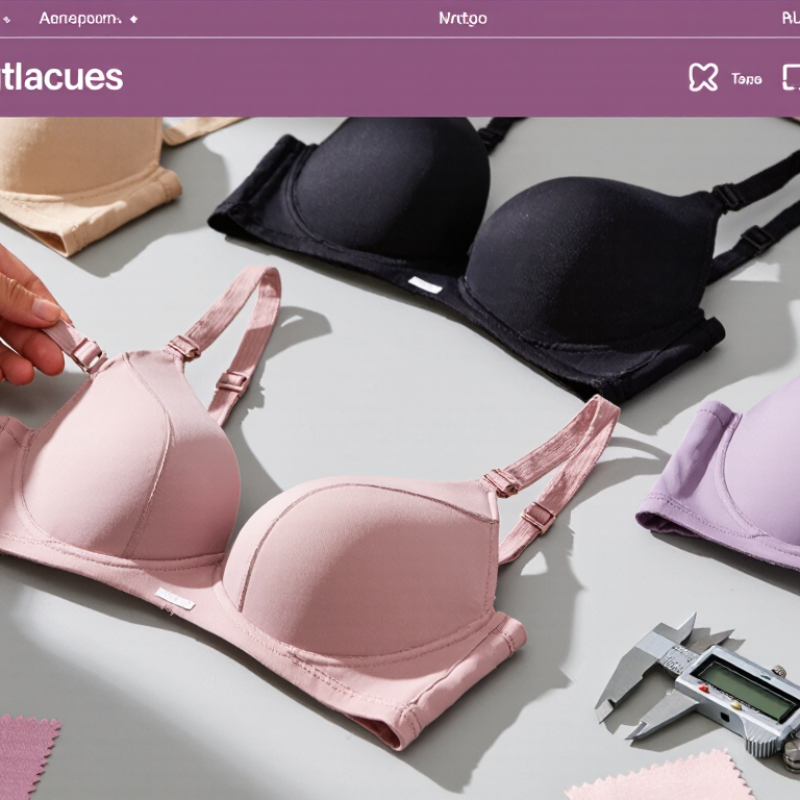
Mesh fabric is not one material. It may use nylon, polyester, elastane, or blended yarns. Textile Exchange’s 2024 Materials Market Report estimates global fiber production reached 124 million tonnes in 2023. Polyester represented about 57% of that volume. This matters when comparing wholesale prices, durability, and moisture management.
A practical inspection should begin with the fabric edge. Warp-knit mesh usually feels stable and resists laddering better than loose weft-knit mesh. Check the elastane percentage, fabric weight, and stretch recovery after ten pulls. A mesh bra should return close to its original width. If it stays wavy, the underband may lose support quickly. Small holes, rough seams, and exposed elastic deserve attention. They often become skin irritants after repeated washing.
Construction matters as much as fiber content. Look for enclosed seams, reinforced strap points, and evenly distributed panel tension. A smooth inner lining can improve comfort without hiding poor stitching. The Ellen MacArthur Foundation has reported that one truckload of textiles is landfilled or burned every second, so material selection deserves more than a cost comparison. Recycled polyester may reduce virgin input, but it does not automatically guarantee softness or durability. I have found that supplier claims can sound precise while test details remain vague. Request fabric composition, GSM, wash testing, colorfastness results, and recovery measurements before placing a large order. Numbers reveal more than attractive sample photos.
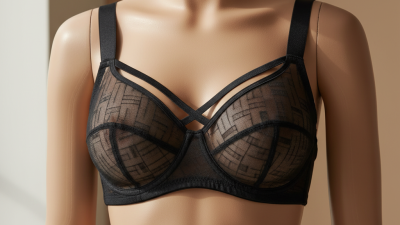
Fiber selection affects breathability, moisture management, stretch recovery, comfort, and care performance. The chart compares approximate moisture regain values under standard textile testing conditions; lower values generally indicate faster drying.
Wholesale buying note: Nylon offers a soft hand and good abrasion resistance, polyester provides low moisture absorption and strong dimensional stability, elastane supplies stretch and recovery, while cotton absorbs more moisture but may dry more slowly. Before placing a bulk order, confirm the fiber composition, mesh weight, aperture size, stretch direction, seam construction, lining, colorfastness, and wash-test results.
A practical wholesale plan begins with a clear definition of need. Decide whether the mesh bras suit boutiques, online lingerie shops, fitness retailers, or seasonal pop-up stores. Each customer group expects different support, coverage, colors, and price points. A sheer fashion style may attract trend-focused shoppers, while a lined design may serve customers seeking everyday comfort.
Estimate quantities from evidence, not excitement. Review past sales, website searches, store traffic, and expected promotions. Build a size curve before placing an order. Do not assume equal quantities across every size. That mistake can leave popular sizes unavailable and slower sizes sitting in storage. Start with a manageable test order when demand is uncertain. It may feel cautious, but unsold inventory costs more than a smaller margin.
Request samples and inspect them under normal handling. Check elastic recovery, cup shape, stitching, mesh strength, strap adjustment, and color consistency. Wash one sample according to its care instructions. Record changes in stretch, opacity, and appearance. Ask for fabric composition, measurement charts, packing details, production time, and acceptable defect standards. Keep these records beside your purchase order.
Your target customer should guide every final choice. Younger buyers may respond to bold colors and decorative details. Practical shoppers may prefer wider bands and smoother seams. Review the sample with real staff or selected customers. Their feedback may challenge your original plan. That is useful. It exposes assumptions before a large wholesale commitment.
Buying mesh bras wholesale requires more than comparing unit prices. Grand View Research estimated the global lingerie market at about USD 94.6 billion in 2023. This growth increases supplier competition, but not necessarily product consistency. Ask for factory records, production capacity, defect rates, and recent test reports. Confirm whether the supplier controls knitting, dyeing, cutting, and sewing processes.
Inspect samples under real conditions. Check mesh recovery after stretching, seam strength, hook security, and edge softness. Measure the same sample before and after washing. Record shrinkage, color transfer, odor, and cup distortion. Use at least three sizes, because a small sample can hide grading problems. Request fabric composition and weight in writing. ISO 105 testing can support colorfastness checks, while ISO 5077 helps assess dimensional changes. These details are easy to overlook.
Material sourcing also deserves scrutiny. Textile Exchange’s 2024 Materials Market Report stated that polyester represented 57% of global fiber production in 2023. That figure makes recycled-content claims worth verifying, not simply accepting. Request transaction records or laboratory evidence when sustainability claims affect pricing. Compare samples from two production batches. They may look identical at first. They may not perform identically after washing. A supplier with clear corrective-action procedures is usually safer than one offering the lowest quote. Still, my judgment can be wrong when sampling is too narrow. Keep written approval standards, inspection photos, and agreed tolerance limits before placing a bulk order.
Buying mesh bras wholesale requires more than comparing the lowest unit price. Ask for a written quotation showing sizes, colors, packaging, and inspection charges. A low price may exclude hooks, labels, or reinforced seams. Request a sample before committing. Press the mesh gently, check its recovery, and inspect stitching after washing. I once underestimated packaging costs. That mistake reduced the expected margin. It still bothers me. Tip: Compare landed cost, not factory price. Add sampling, freight, duties, payment fees, and possible quality replacements.
Minimum order quantities can change the real price quickly. One supplier may offer 500 pieces, while another requires 2,000 pieces per color. Ask whether the MOQ applies per style, size, or color. A mixed-size assortment may help smaller retailers, but it can raise the unit price. Confirm the size ratio in writing. Do not assume it matches your customers. Review recent sales data, even if it is incomplete. Tip: Negotiate a trial order. A slightly higher unit price may be safer than excess inventory. Excess stock ties up cash.
Shipping terms deserve equal attention. Compare EXW, FOB, CIF, and DDP only when you understand the remaining costs. Confirm production time, port handling, carton dimensions, tracking, and delay responsibility. Ask for a realistic dispatch window, not a hopeful date. Air freight may protect a launch date, but sea freight usually lowers costs for larger orders. Get insurance details and a packing list. Small omissions can create expensive delays. Tip: Request two freight quotes. Compare delivery time and total landed cost. Record the agreed terms on the purchase order. Vague wording causes avoidable disputes.
| Tip | Comparison Dimension | Typical Wholesale Benchmark | What to Confirm Before Ordering | Practical Buying Guidance |
|---|---|---|---|---|
| 1 | Compare the unit price by order quantity | Basic mesh bras commonly fall around US$3.00–US$6.50 per piece for standard wholesale orders. Larger production runs may receive lower pricing. | Ask whether the quotation includes cups, elastics, labels, packaging, and any requested size adjustments. | Compare at least three quantity tiers, such as 100, 500, and 1,000 pieces, rather than comparing one price alone. |
| 2 | Check the minimum order quantity | Ready-made wholesale orders often start at approximately 50–200 pieces per style. Custom colors or private-label production may require 300–1,000 pieces per style. | Confirm whether the MOQ applies per color, per size range, or to the complete style. | For a market test, choose stock colors and combine sizes only when the supplier permits mixed-size ordering. |
| 3 | Separate stock items from custom production | In-stock items normally have shorter processing times and lower MOQs. Custom mesh, lace, color, hardware, or labeling usually increases both cost and lead time. | Request a written distinction between stock, modified stock, and fully custom production. | Use stock designs for initial testing and reserve custom development for products with proven demand. |
| 4 | Evaluate fabric composition and performance | Common mesh-bra fabrics include nylon/elastane or polyester/elastane blends. Elastane content is often approximately 5%–20%, depending on the required stretch and support. | Check fiber content, fabric weight, stretch recovery, colorfastness, cup lining, and skin-contact safety documentation. | Request a physical sample because a low price may reflect thinner mesh, weaker elastic, or less supportive construction. |
| 5 | Review size grading and fit samples | Wholesale size runs commonly range from 32A–38D or equivalent regional sizing, but available ranges vary by pattern and supplier. | Confirm band and cup measurement charts, grading increments, tolerance limits, and whether larger sizes use reinforced support features. | Approve a pre-production sample in a representative size before committing to a full size run. |
| 6 | Compare payment terms | A common international arrangement is 30% deposit and 70% balance before shipment. Smaller first orders may require full payment before dispatch. | Confirm the payment method, transaction fees, refund conditions, inspection point, and documents provided after payment. | For a first order, use a payment process that provides a clear transaction record and link balance payment to inspection or approved production photos. |
| 7 | Compare shipping terms accurately | EXW usually excludes export transport; FOB includes delivery to the agreed origin port; CIF includes freight and basic insurance to the destination port; DDP is intended to include delivery and import duties where legally available. | Confirm the named place, included charges, customs responsibility, insurance coverage, and whether destination handling fees are excluded. | Compare the total landed cost, not just the product price or freight quote. |
| 8 | Estimate lead time and shipping speed | Sampling often takes about 7–14 days; standard production commonly takes 20–45 days after approval. Air freight is generally faster than ocean freight but costs more. | Ask when lead time starts: deposit receipt, material approval, size-set approval, or final artwork approval. | Build in extra time for quality inspection, export documentation, customs clearance, and possible holiday or peak-season delays. |
| 9 | Calculate the complete landed cost | Landed cost may include product price, sample fees, labels, packaging, inland transport, freight, insurance, customs duties, taxes, and destination handling charges. | Request a line-item quotation and identify which costs are estimated, fixed, refundable, or payable at destination. | Use a per-piece landed-cost worksheet before selecting the lowest unit quotation. |
| 10 | Set quality-control requirements | Typical inspections review measurements, stitching, mesh damage, elastic recovery, hardware attachment, labels, packaging, and visible defects. | Agree on an inspection standard, acceptable defect limits, inspection timing, and the remedy for shortages or nonconforming goods. | Use approved samples, measurement tolerances, and carton counts as part of the purchase order rather than relying only on verbal promises. |
Indicative wholesale benchmarks are provided for planning purposes. Actual prices, MOQs, lead times, freight charges, duties, and taxes vary by construction, quantity, destination, season, and negotiated trade terms.
10 Tips for Buying Mesh Bras Wholesale?
Checking Sizing, Compliance, Customization, and Return Policies
When buying mesh bras wholesale, sizing is the first risk to control. Request a graded size chart, not one sample measurement. Check band recovery, cup depth, strap placement, and mesh stretch after washing. ISO 8559-2:2017 supports consistent body-measurement definitions, but factories may still grade differently. Measure five pieces per size. Record the largest variation. My own mistake was trusting a “standard” medium; the band felt right, yet the cups compressed.
Compliance must match the destination market. Ask for fiber-content labels, care instructions, flammability evidence where required, and restricted-substance test records. Do not accept a generic certificate. Match each report to the exact fabric, dye lot, and production site. The 2024 Textile Exchange Materials Market Report estimated recycled polyester represented 15% of global polyester production in 2023. Material claims need traceable documents. Customization should follow testing, not replace it. Request a pre-production sample with hooks, elastic, lining, and logo placement approved in writing. Small changes can alter fit.
Return terms deserve equal scrutiny. NRF and Appriss Retail reported 743 billion dollars in U.S. merchandise returns during 2023, equal to 14.5% of retail sales. The figure covers many categories, but it shows why wholesale returns need clear cost ownership. Define defect thresholds, inspection windows, photo evidence, and freight responsibility. Separate manufacturing defects from buyer over-ordering. Test a small shipment before scaling. A perfect policy is unlikely; ambiguity is worse. Ask what happens when only part of a carton fails.